Getting Your Deck Ready for an Ozarks Winter
By Brian Beard, Beard's Home Services · Mountain Home, AR
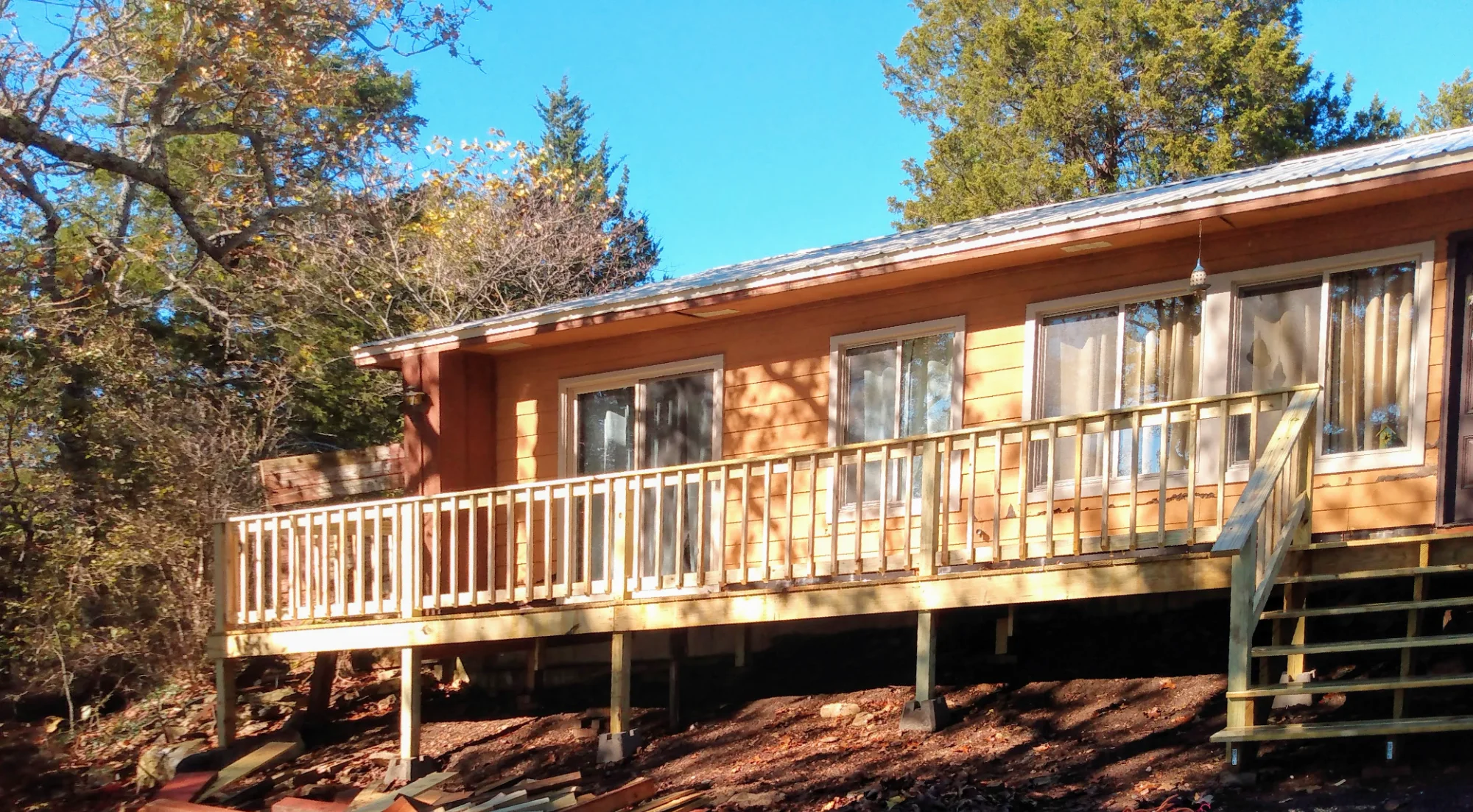
Ozarks winters aren't long, but they're rough on wood. We don't get one deep freeze — we get dozens of freeze-thaw cycles. Water gets into a crack or a fastener hole during the day, freezes that night, and pushes it open a little wider. By spring, small problems are bigger ones. A couple of hours this fall goes a long way.
1. Get the Leaves Off — and Keep Them Off
Wet leaves sitting on deck boards all winter hold moisture against the wood, stain it, and grow mildew. They also clog the gaps between boards so water can't drain. Blow or sweep the deck after the leaves fall, and clear the gaps with a putty knife where debris has packed in. Don't forget under planters and furniture.
2. Clean It and Check the Finish
Do the water test: sprinkle some water on the boards. If it beads up, your sealer is still working. If it soaks in and darkens the wood right away, the wood is unprotected going into winter.
If it needs sealing, fall can be a good time — but only on a dry stretch with daytime temperatures comfortably above 50°F and no rain in the forecast for a day or two. The wood has to be clean and dry first. If we've already turned cold, it's better to clean the deck now and seal in spring than to put sealer on damp, cold wood where it won't soak in.
3. Walk It and Look for Trouble
- Soft spots. Push a screwdriver into any board that looks dark or punky, especially at the ends and where boards sit on the joists. If it sinks in easily, that board needs to be replaced.
- Popped nails and loose screws. Freeze-thaw pushes nails up. Drive them back down or, better, replace them with deck screws.
- The ledger board. That's where the deck attaches to the house. Look for rust streaks, gaps between the ledger and the house, or missing flashing. This connection is what holds the whole deck up, and it's the one I worry about most.
- Posts at the ground. Wood posts rot where they meet soil or concrete. Probe them at the base.
4. Railings and Stairs
These matter most in winter, because they're what people grab when the steps are icy. Shake every railing post firmly — there should be no wobble. Check that each stair tread is solid and the stringers aren't cracked or rotted where they sit on the ground. A wobbly railing gets fixed before winter, not after someone slips.
5. Plan for Ice
Rock salt is hard on wood and corrodes metal fasteners and hardware. If you need to treat ice on the deck or the steps, use a deck-safe ice melt (calcium magnesium acetate is gentle), or sand for traction. Use a plastic shovel, and push along the length of the boards, not across them.
6. Move Things Around
Pull planters off the deck or set them on risers so water drains underneath. Store furniture or move it now and then. Anything that sits in one spot all winter leaves a wet, stained, and sometimes rotted square behind.
The Short Version
Clear the leaves, check whether the finish still beads water, probe for soft wood, tighten what's loose, and make sure the railings and stairs are rock solid. Fixing a few boards and a loose rail this fall is a small job. Letting a winter of freeze-thaw work on them makes it a bigger one.
Brian Beard has been doing home repair and remodeling in Mountain Home, AR and the Twin Lakes area for over 20 years. See our deck services, or call or text (870) 321-1072 for a free estimate, no upfront payment.