Vinyl Plank vs Laminate in Arkansas Humidity — Which Floor Holds Up
By Brian Beard, Beard's Home Services · Mountain Home, AR
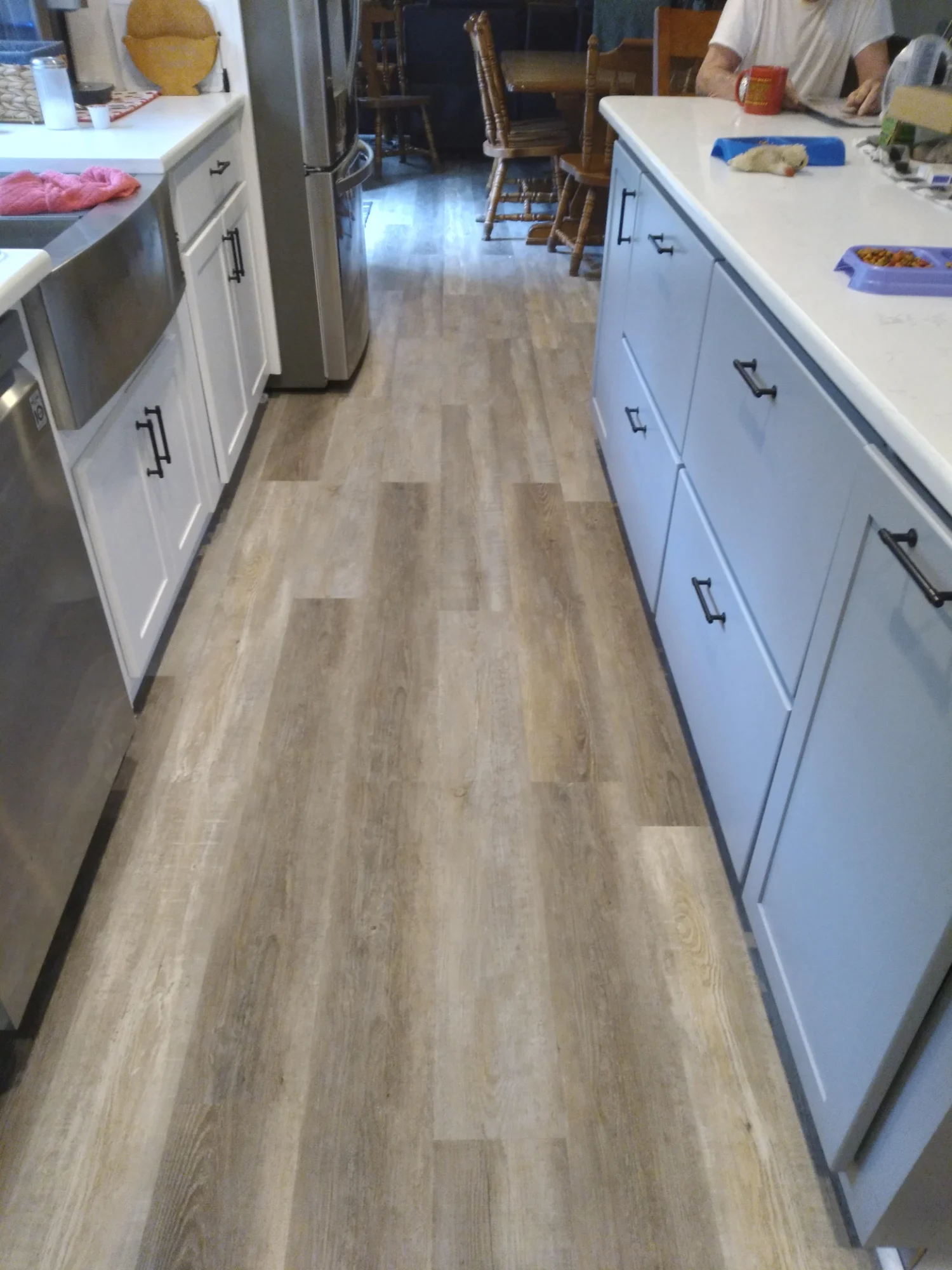
The most common flooring question I get in Mountain Home is some version of this: "Should I do the vinyl plank or the laminate?" They look almost identical in the store. They cost about the same. And they install about the same way. But they are built from completely different materials, and in an Arkansas summer that difference matters.
What Each One Actually Is
Laminate is a photo of wood glued on top of a core made from compressed wood fiber (high-density fiberboard). It's hard, it resists scratches well, and it feels solid underfoot. But that core is still wood fiber. When water gets into a seam, the core swells, and swollen laminate does not go back down.
Luxury vinyl plank (LVP) uses a plastic-based core — either a flexible vinyl or a rigid stone-plastic composite (SPC). Water sitting on it doesn't hurt the plank itself. That's why it's become the default for kitchens, baths and laundry rooms.
Why Humidity Is the Real Test Here
Our summers run humid for months, and a lot of homes around Twin Lakes sit over a crawlspace or on a slab that wicks moisture. Every floating floor moves with the seasons — it grows a little when the air is wet and shrinks when the heat comes on in winter. That's why both kinds need an expansion gap around the edges, hidden under the baseboard.
Laminate is more sensitive to that movement and to moisture coming up from below. Over a crawlspace without a good vapor barrier, or on a slab without a moisture barrier underlayment, I've seen laminate cup at the edges within a year or two. LVP handles the same conditions much better, though it still needs that gap and a flat subfloor.
Which Room Gets Which
- Kitchens, bathrooms, laundry rooms, entry ways: LVP. Spills, dishwasher leaks, wet boots and toilet overflows are a when, not an if.
- Basements and slab-on-grade rooms: LVP, over a proper moisture barrier.
- Bedrooms, living rooms and offices on a dry, stable subfloor: either one works. Laminate often feels a little more solid and resists scratches from furniture better.
- Homes with big dogs: a quality laminate with a high wear rating resists claw scratches better, but LVP forgives the water bowl and the accidents. For most pet households I lean LVP.
What Separates a Good Install From a Bad One
Most flooring failures I get called to fix aren't the product's fault. They come from the prep:
- The subfloor isn't flat. Click-lock floors need a flat surface — dips and humps flex the joints until they break or separate. High spots get sanded or ground; low spots get filled.
- No acclimation. Boxes should sit in the room they're going into for a day or two with the A/C running, so the planks start at the home's normal temperature and humidity.
- No expansion gap. Planks butted tight to the walls or trapped under cabinets have nowhere to go in July, so they buckle.
- Skipping the transitions. Long runs through doorways usually need a break to let each room move on its own.
The Short Version
If the room can get wet, put down LVP. If it's a dry room on a solid floor, either one works and it comes down to how it looks and feels to you. Whatever you pick, the flat subfloor and the expansion gap are what decide whether it still looks good in five years.
Brian Beard has been doing home repair and remodeling in Mountain Home, AR and the Twin Lakes area for over 20 years. See our flooring services, or call or text (870) 321-1072 for a free estimate, no upfront payment.